What is Compass Go?
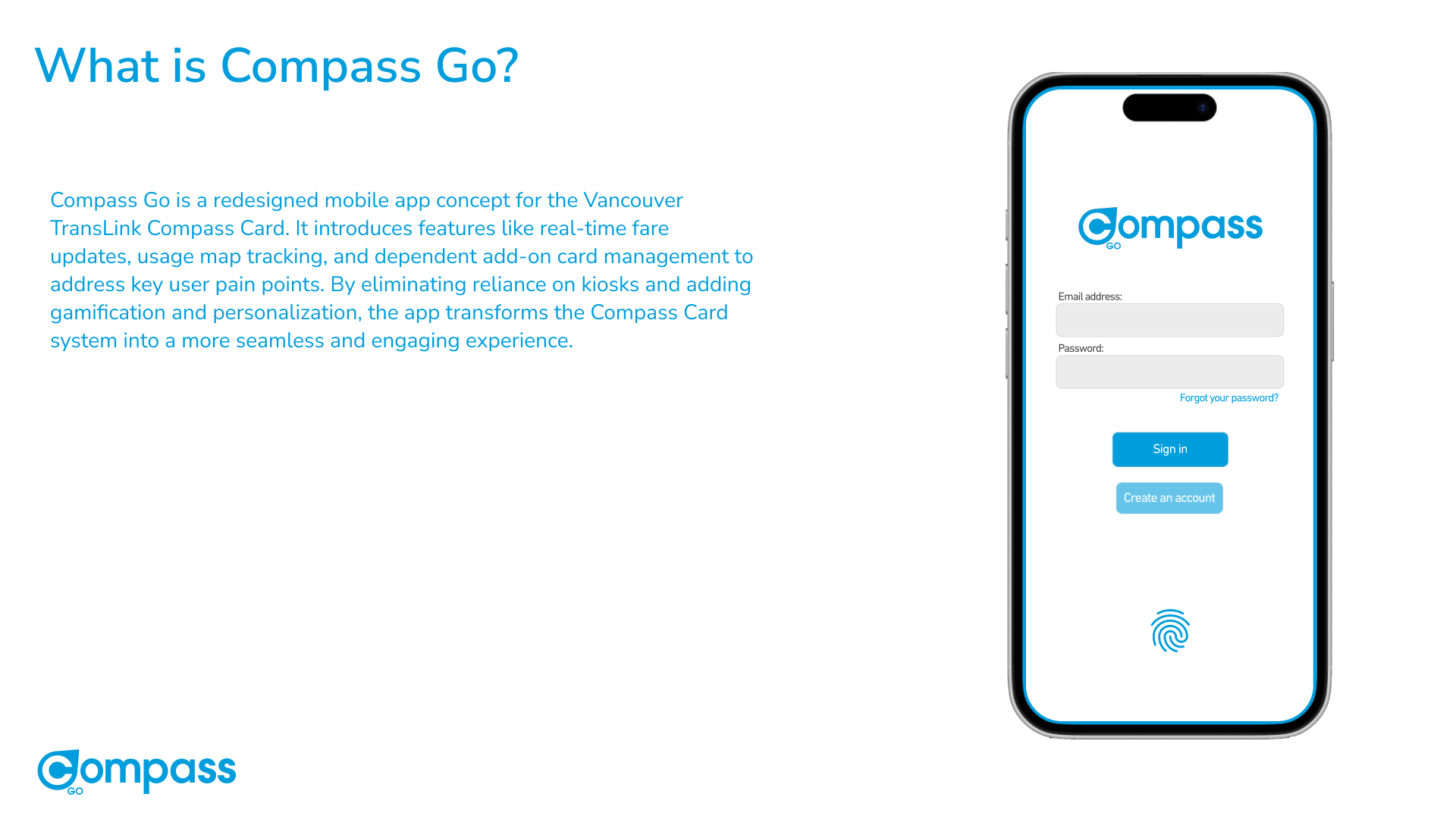
Compass Go is a redesigned mobile app concept for the Vancouver TransLink Compass Card. It introduces features like real-time fare updates, usage map tracking, and dependent add-on card management to address key user pain points. By eliminating reliance on kiosks and adding gamification and personalization, the app transforms the Compass Card system into a more seamless and engaging experience.
Business Objective
The Compass Go app bridges the gap between user needs and transit committee goals. For users, the app provides real-time trip information and seamless transit card management, helping them save time and simplify their transit experience.
For the Transit Committee, Compass Go reduces reliance on physical kiosks and alleviates rush hour congestion by encouraging app adoption and engagement. This alignment drives efficiency and enhances the overall transit experience.
Initial Research & Design Opportunity
Our research highlights the frustration transit riders face when their Compass Card runs out of funds. Without nearby kiosks (typically only available at SkyTrain stations) or due to a two-hour delay for online top-ups, riders often resort to tapping their credit card, which incurs higher fares — $3.20 vs. $2.60 for a 1-zone trip.
Compass Go resolves these issues by simplifying reloading and providing a seamless, user-friendly experience, ensuring riders avoid unnecessary costs and frustration.
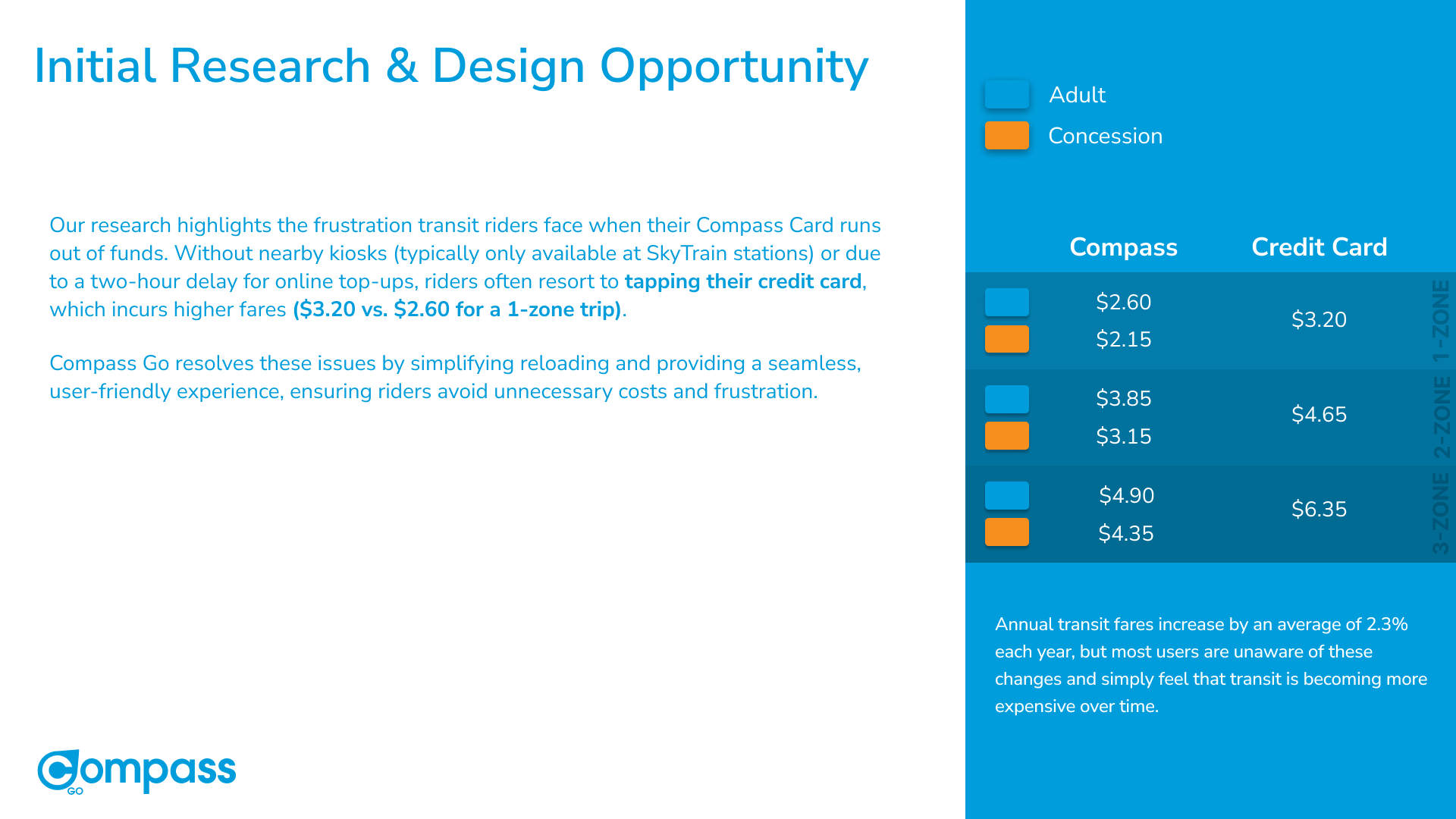
Annual transit fares increase by an average of 2.3% each year, but most users are unaware of these changes.
User Research and Findings
Our user research revealed a strong demand for a dedicated Compass Card mobile app, with 76% preferring it over kiosks or the website. Additionally, 68% of users want features to monitor transit card usage, and 65% prioritize real-time balance notifications. These findings highlight an opportunity to address key pain points and deliver a more convenient, user-centered solution.
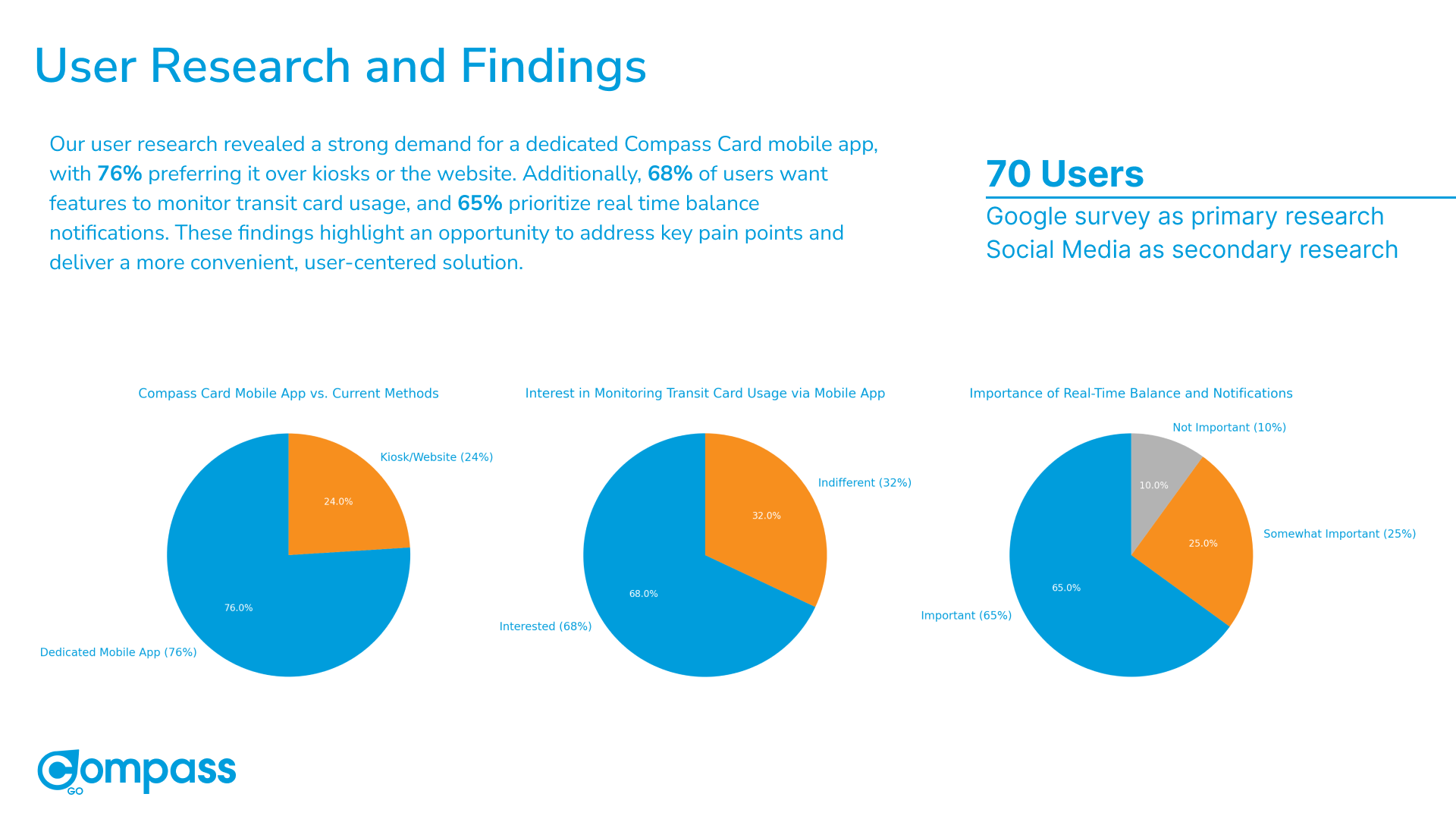
70 users surveyed — Google survey as primary research, social media as secondary research
Pain Points & Opportunity
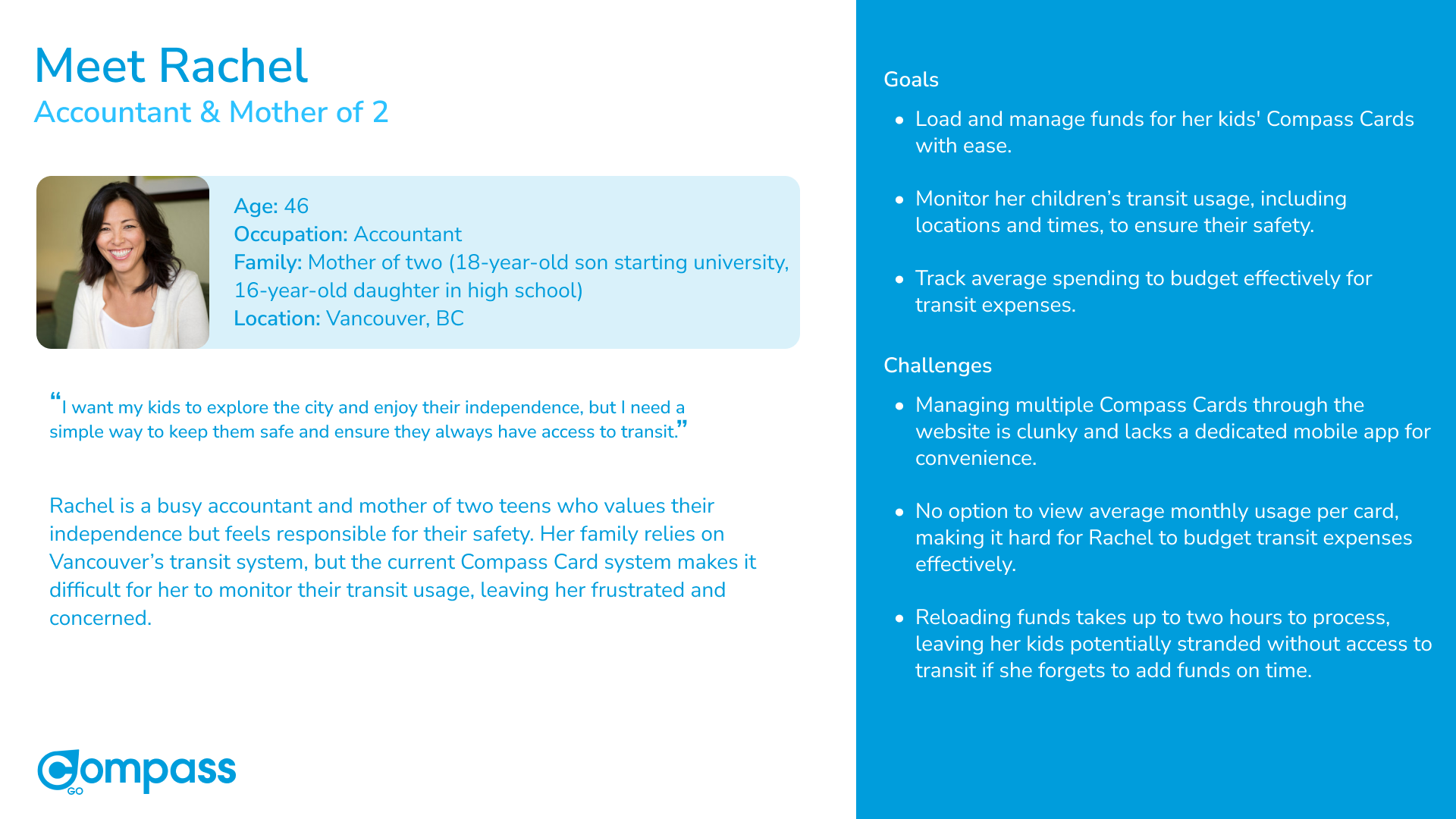
The current Compass Card system lacks a mobile platform, presenting a clear opportunity to enhance the transit experience for Vancouver riders. Our research highlights key pain points, positioning Compass Go as a mobile-first solution to modernize and streamline the system.
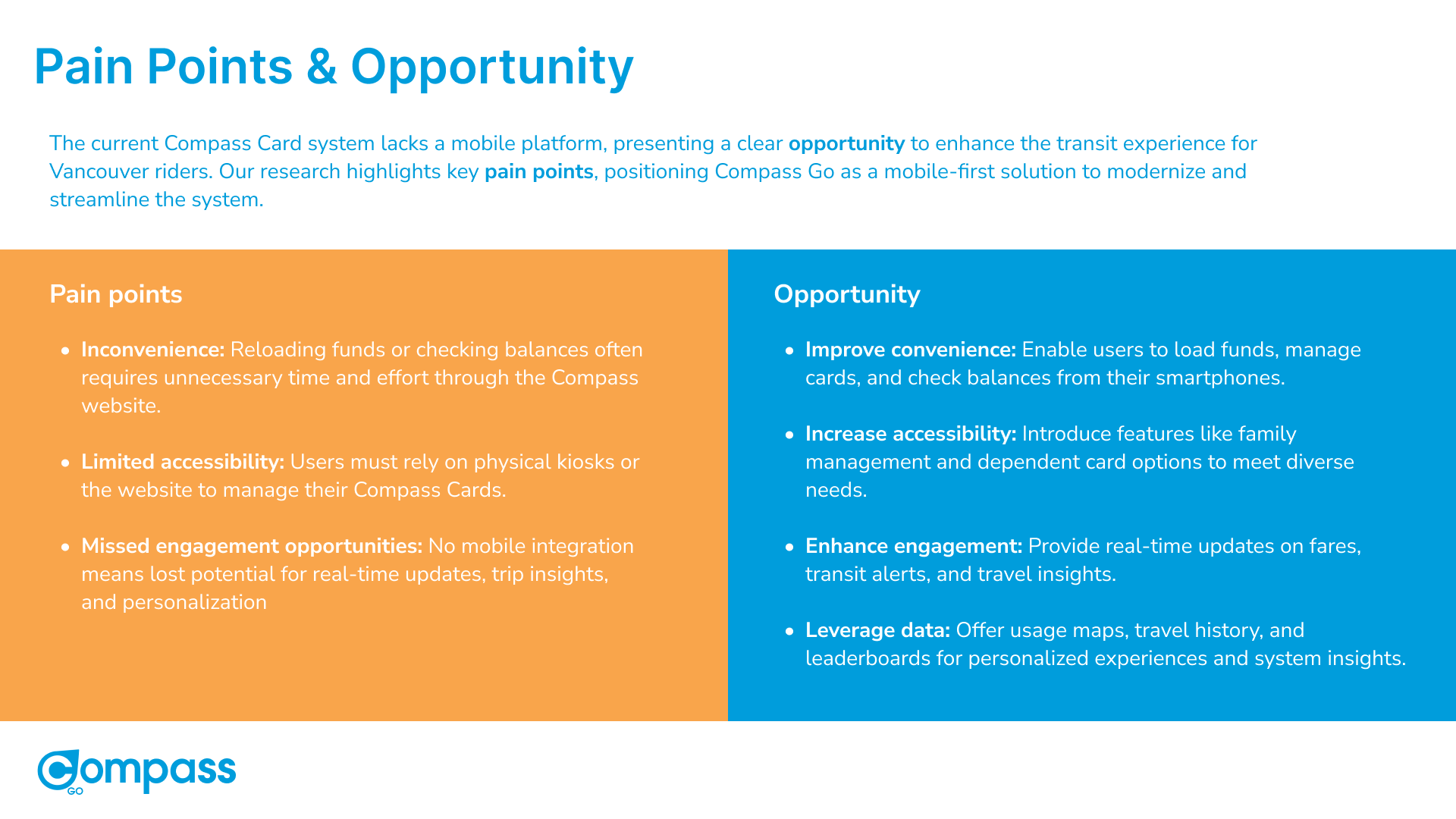
Meet Rachel — Accountant & Mother of 2
Rachel is a busy accountant and mother of two teens (18-year-old son starting university, 16-year-old daughter in high school) who values their independence but feels responsible for their safety. Her family relies on Vancouver's transit system, but the current Compass Card system makes it difficult for her to monitor their transit usage, leaving her frustrated and concerned.
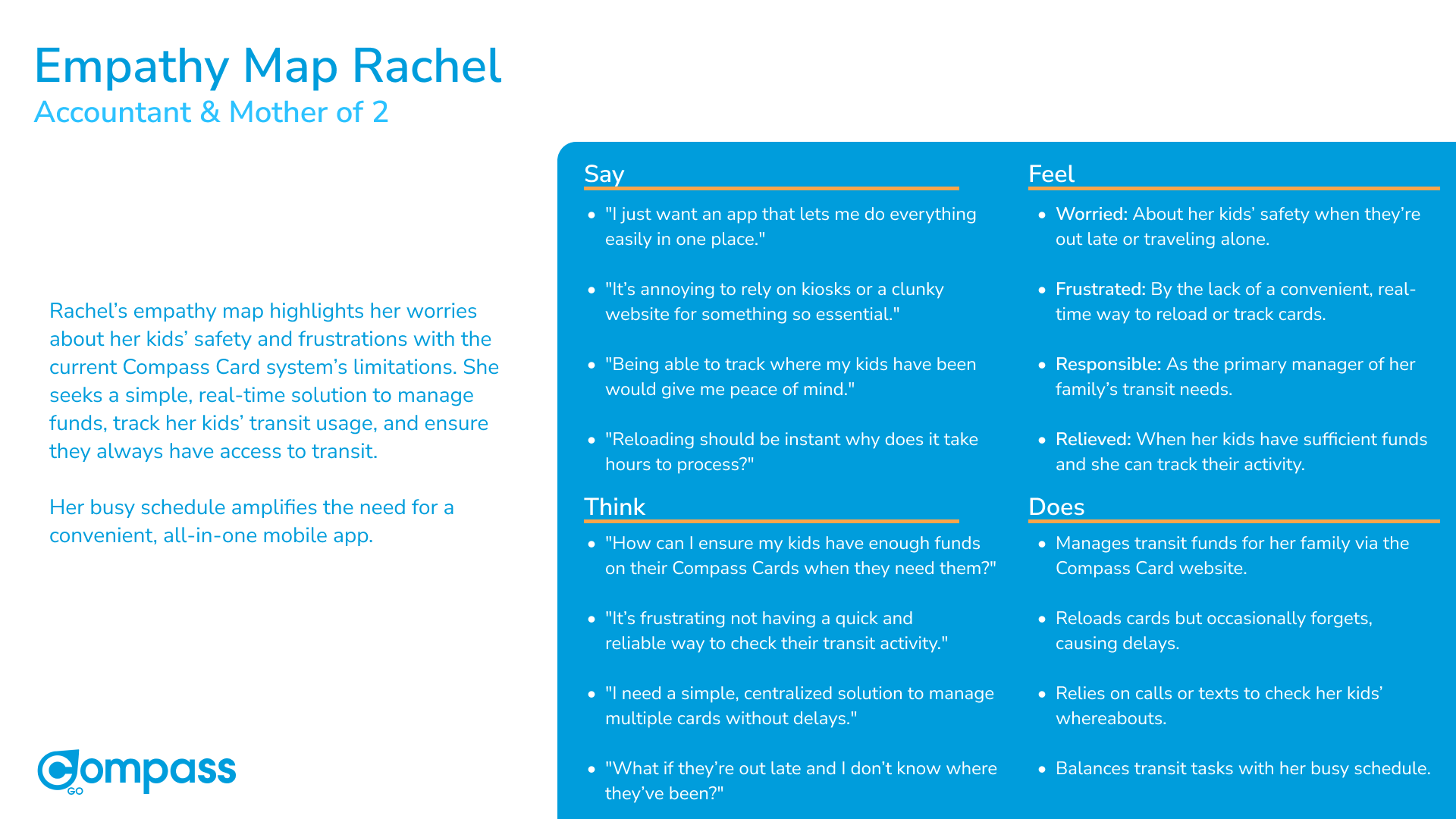
Empathy Map — Rachel
Rachel's empathy map highlights her worries about her kids' safety and frustrations with the current Compass Card system's limitations. She seeks a simple, real-time solution to manage funds, track her kids' transit usage, and ensure they always have access to transit. Her busy schedule amplifies the need for a convenient, all-in-one mobile app.
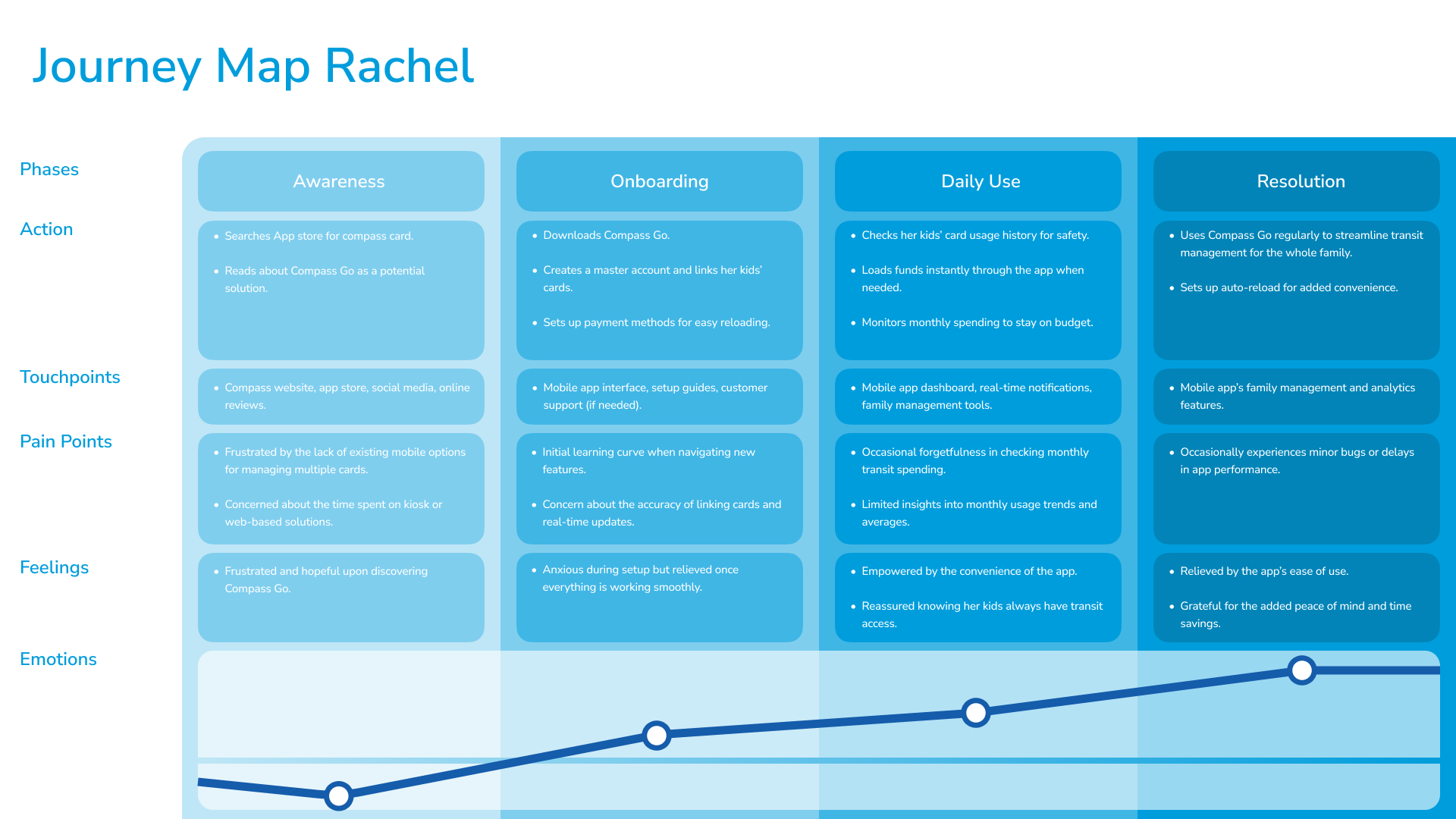
Journey Map — Rachel
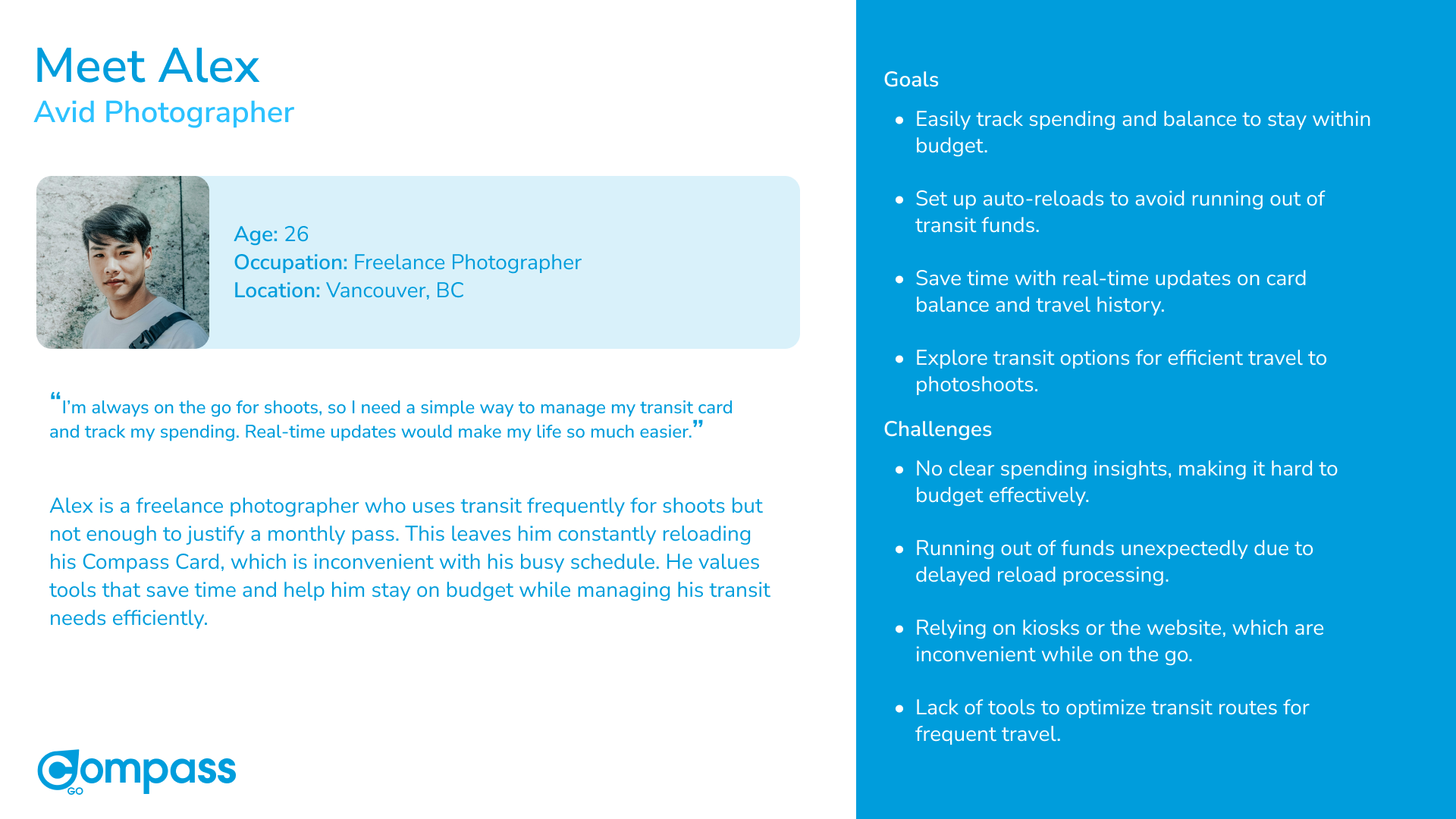
Meet Alex — Freelance Photographer
Alex is a 26-year-old freelance photographer who uses transit frequently for shoots but not enough to justify a monthly pass. This leaves him constantly reloading his Compass Card, which is inconvenient with his busy schedule. He values tools that save time and help him stay on budget while managing his transit needs efficiently.
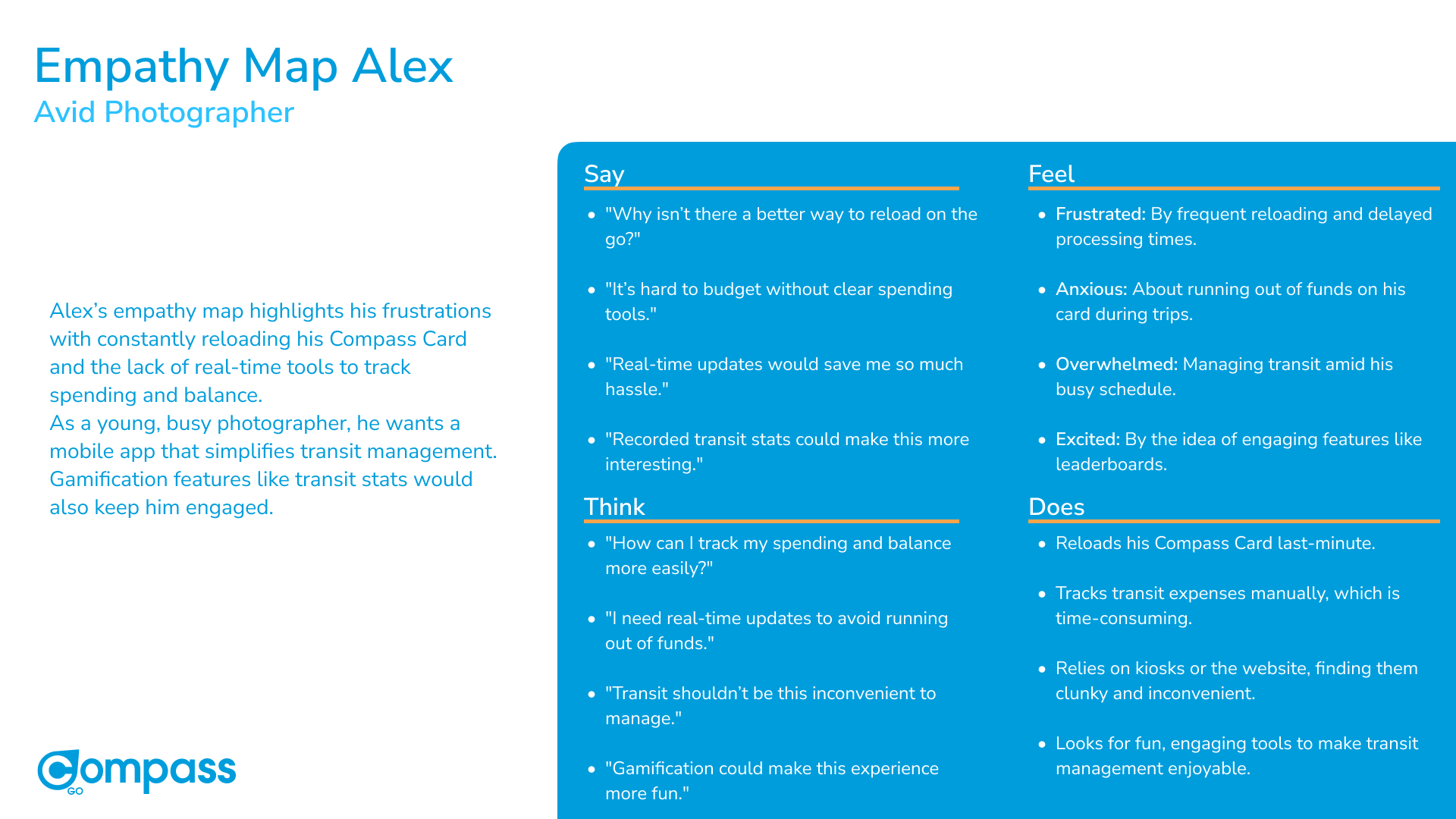
Empathy Map — Alex
Alex's empathy map highlights his frustrations with constantly reloading his Compass Card and the lack of real-time tools to track spending and balance. As a young, busy photographer, he wants a mobile app that simplifies transit management. Gamification features like transit stats would also keep him engaged.
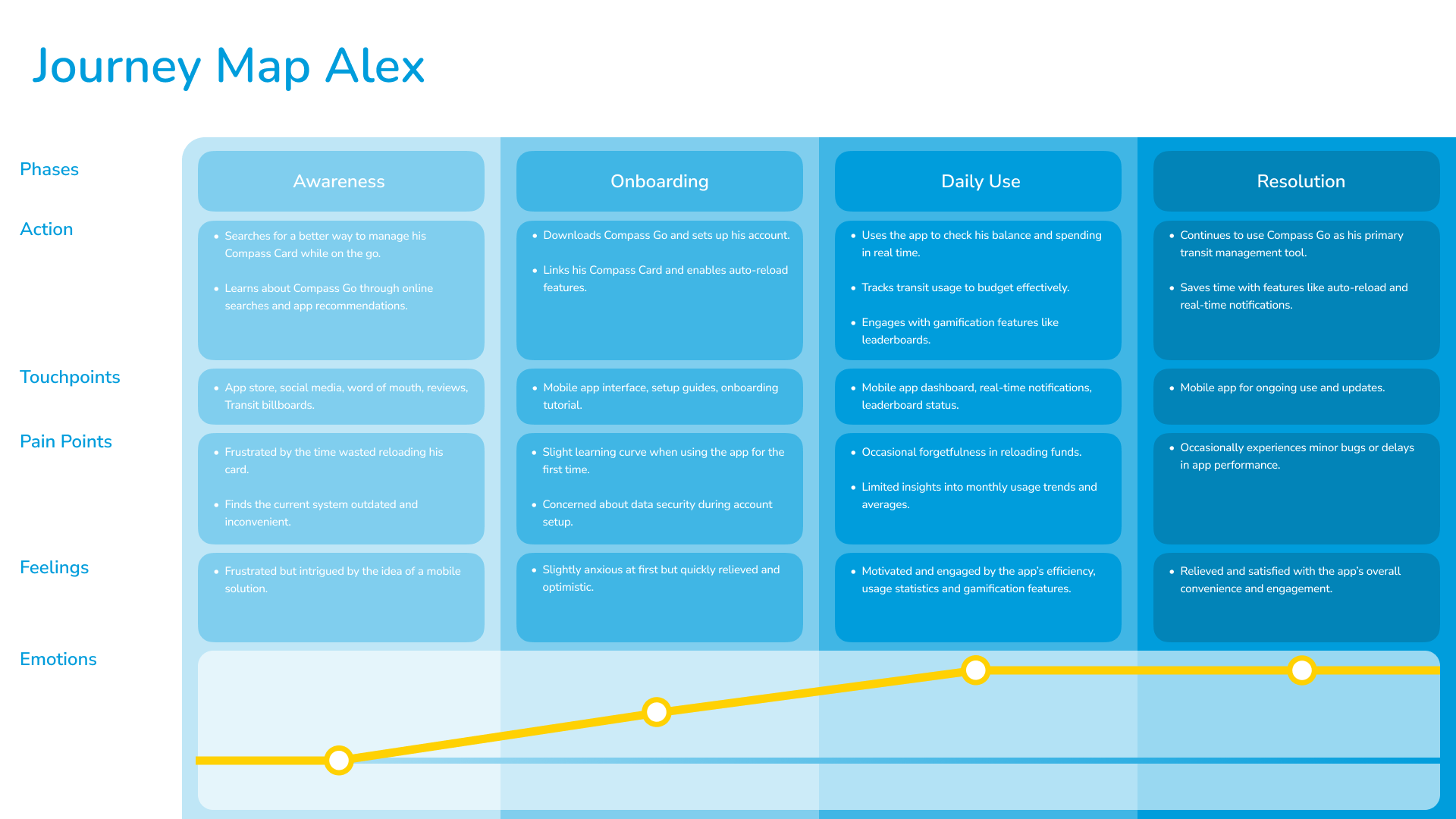
Journey Map — Alex
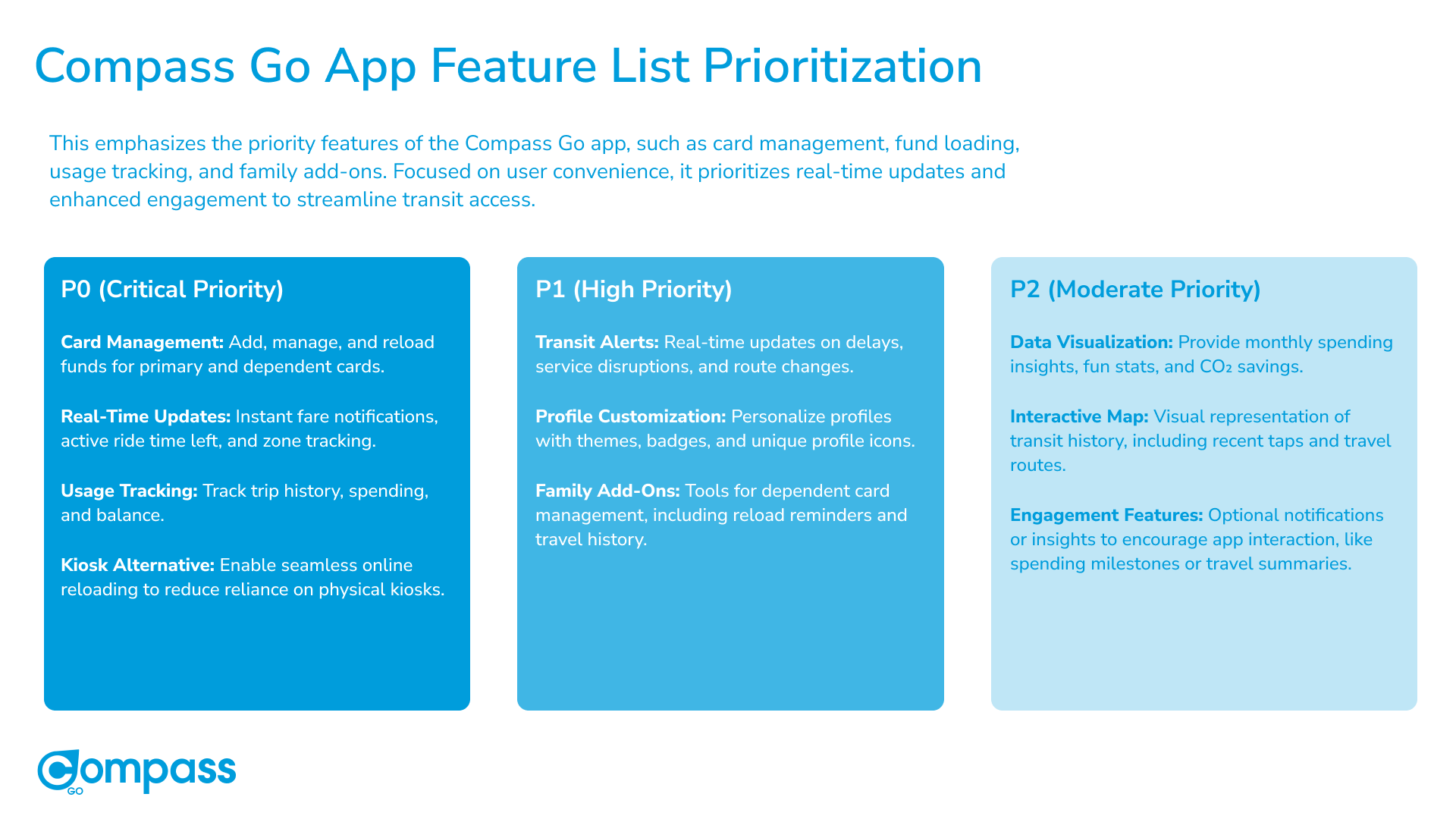
Feature List Prioritization
This framework emphasizes the priority features of the Compass Go app, such as card management, fund loading, usage tracking, and family add-ons. Focused on user convenience, it prioritizes real-time updates and enhanced engagement to streamline transit access.
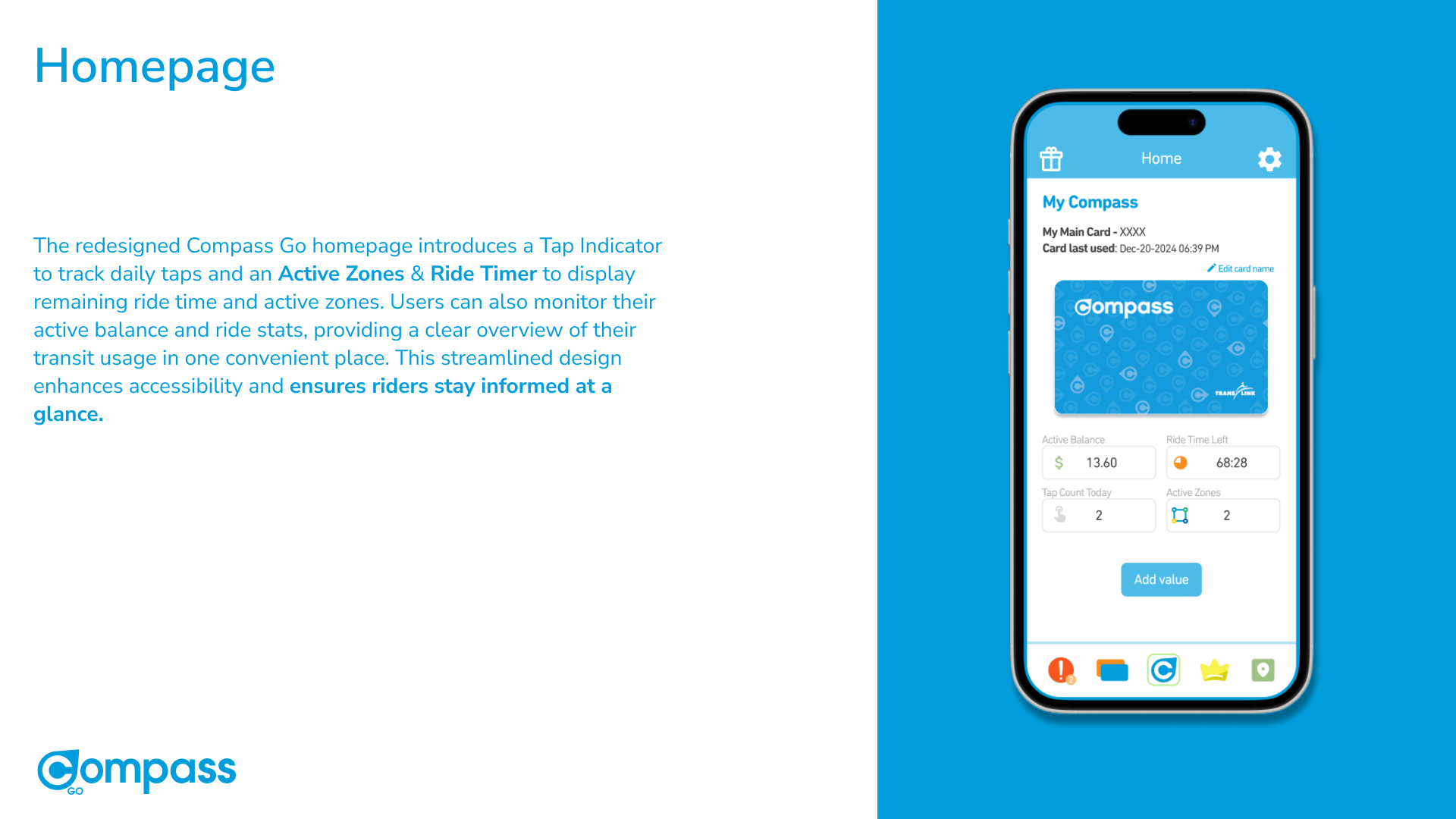
Redesign — Homepage
The redesigned Compass Go homepage introduces a Tap Indicator to track daily taps and an Active Zones & Ride Timer to display remaining ride time and active zones. Users can also monitor their active balance and ride stats, providing a clear overview of their transit usage in one convenient place. This streamlined design enhances accessibility and ensures riders stay informed at a glance.
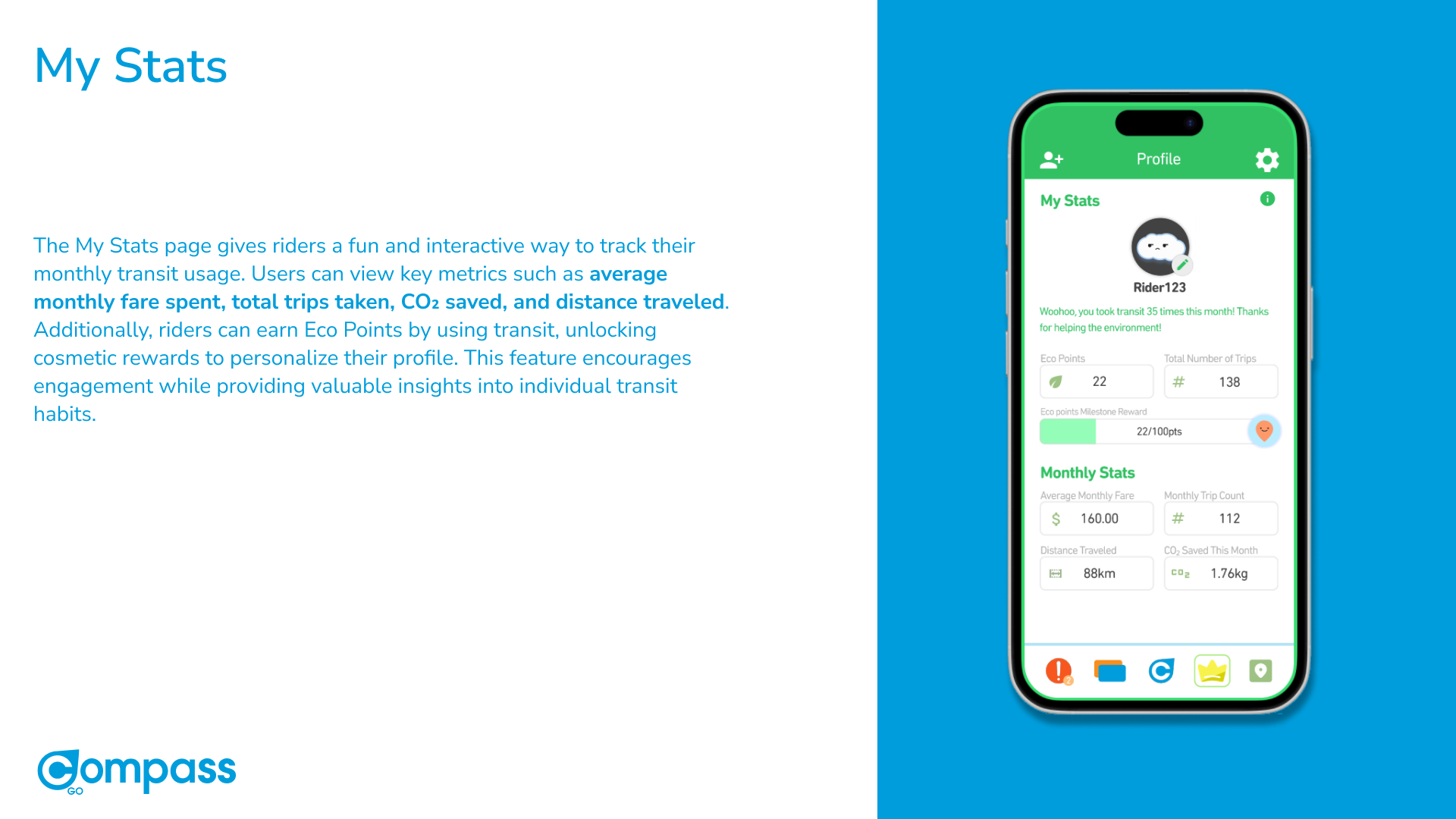
Redesign — My Stats
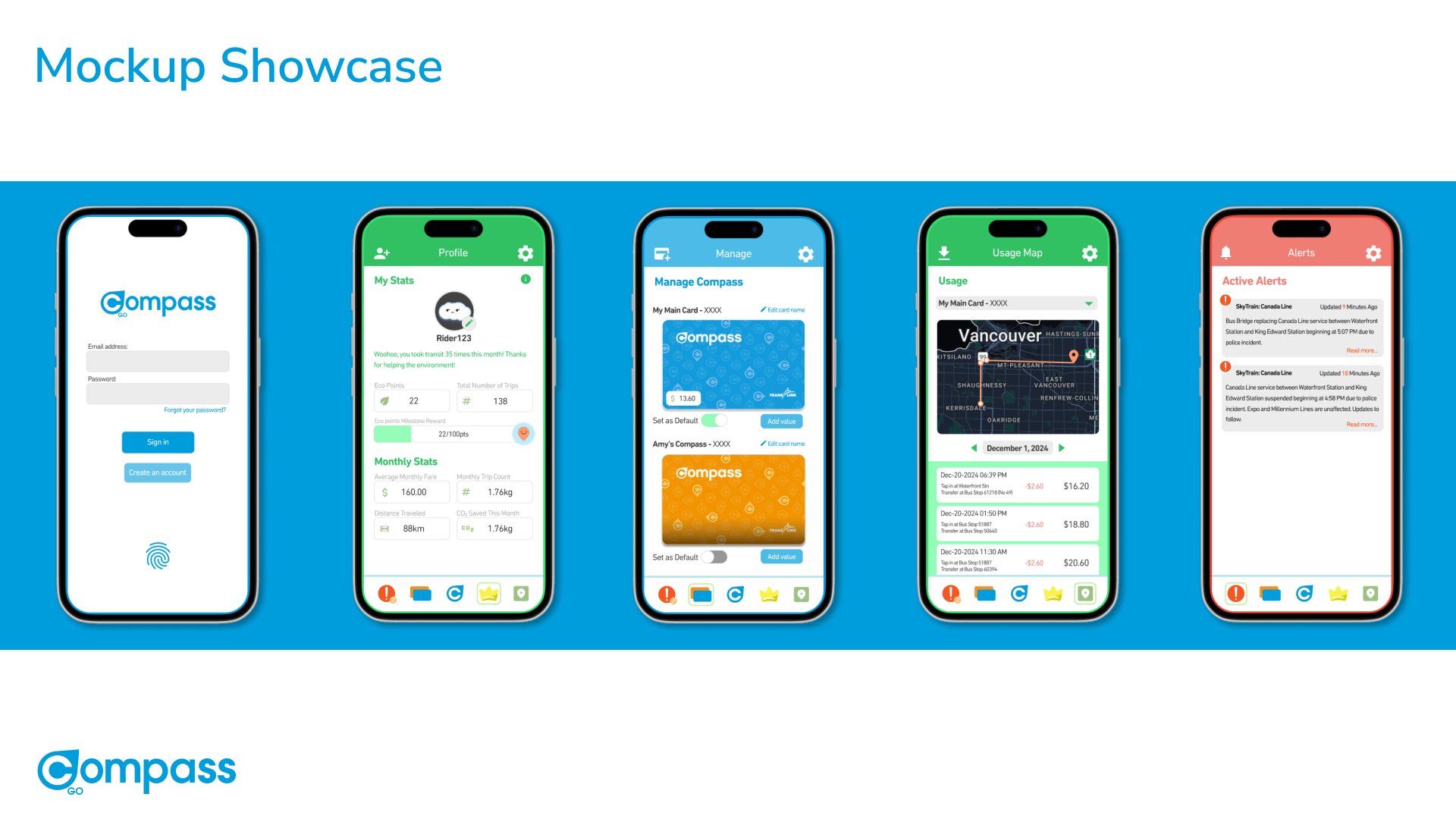
The My Stats page gives riders a fun and interactive way to track their monthly transit usage. Users can view key metrics such as average monthly fare spent, total trips taken, CO₂ saved, and distance traveled. Additionally, riders can earn Eco Points by using transit, unlocking cosmetic rewards to personalize their profile. This feature encourages engagement while providing valuable insights into individual transit habits.
Redesign — Manage Cards
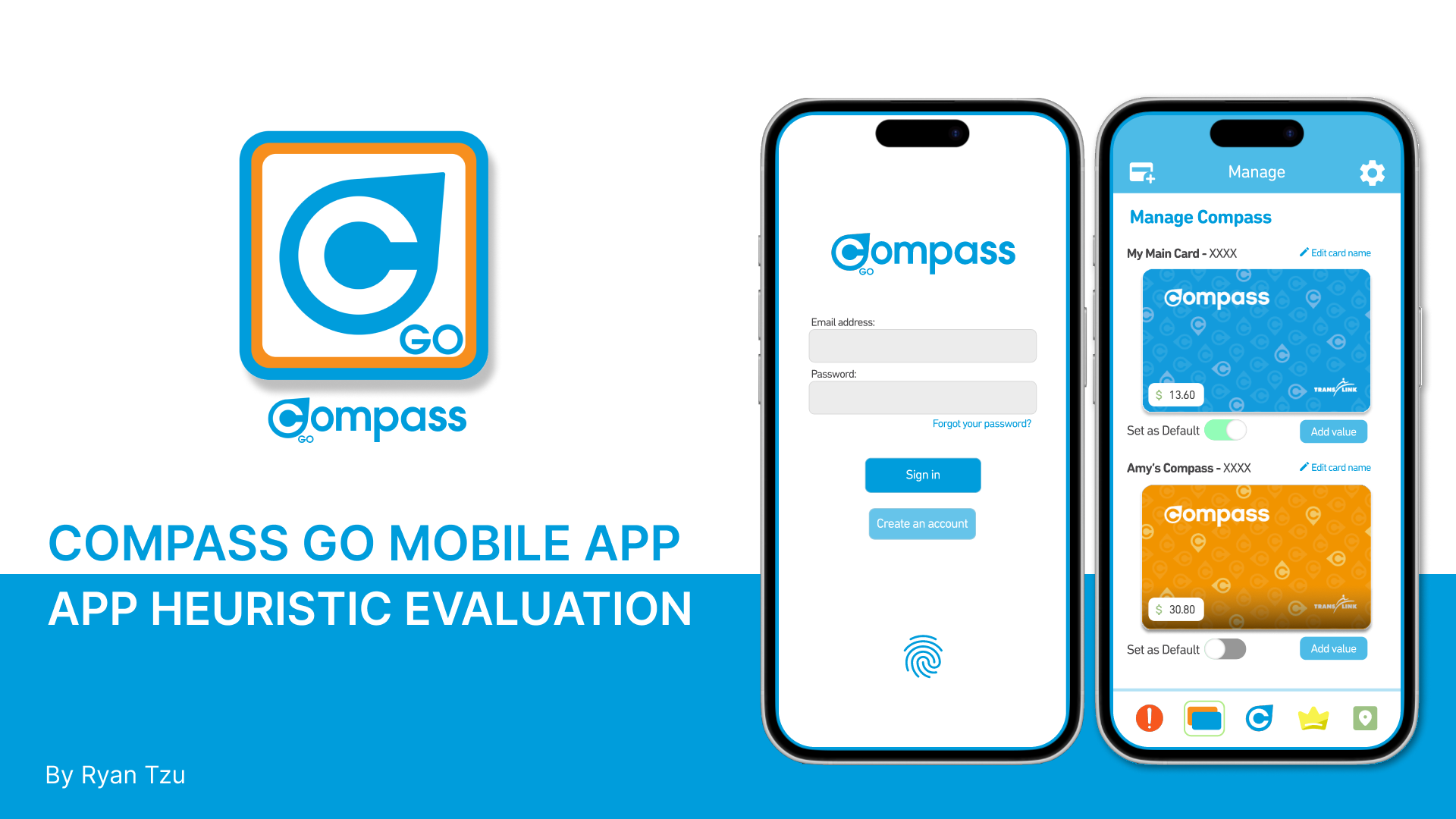
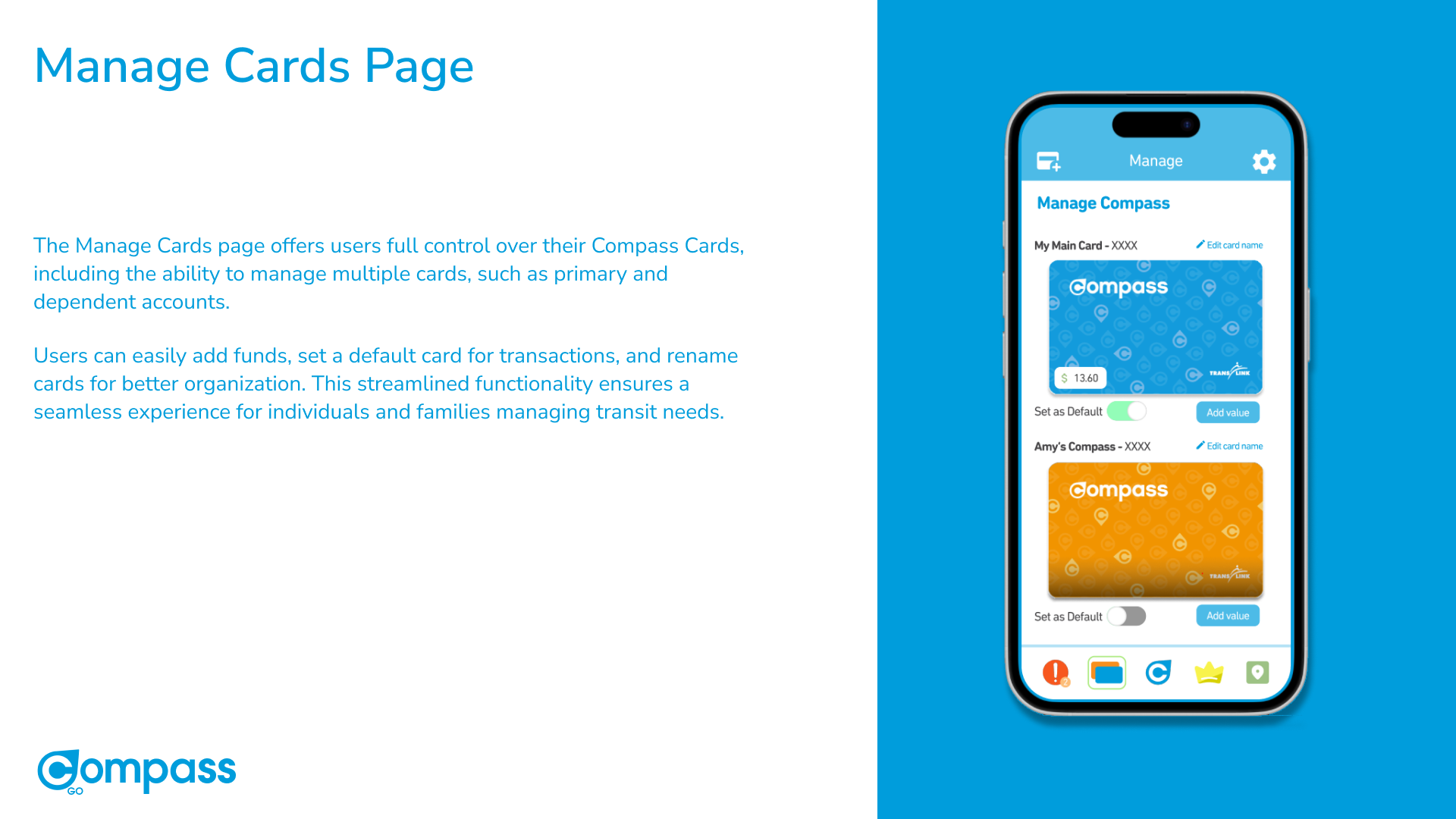
The Manage Cards page offers users full control over their Compass Cards, including the ability to manage multiple cards, such as primary and dependent accounts. Users can easily add funds, set a default card for transactions, and rename cards for better organization. This streamlined functionality ensures a seamless experience for individuals and families managing transit needs.
Redesign — Usage Map
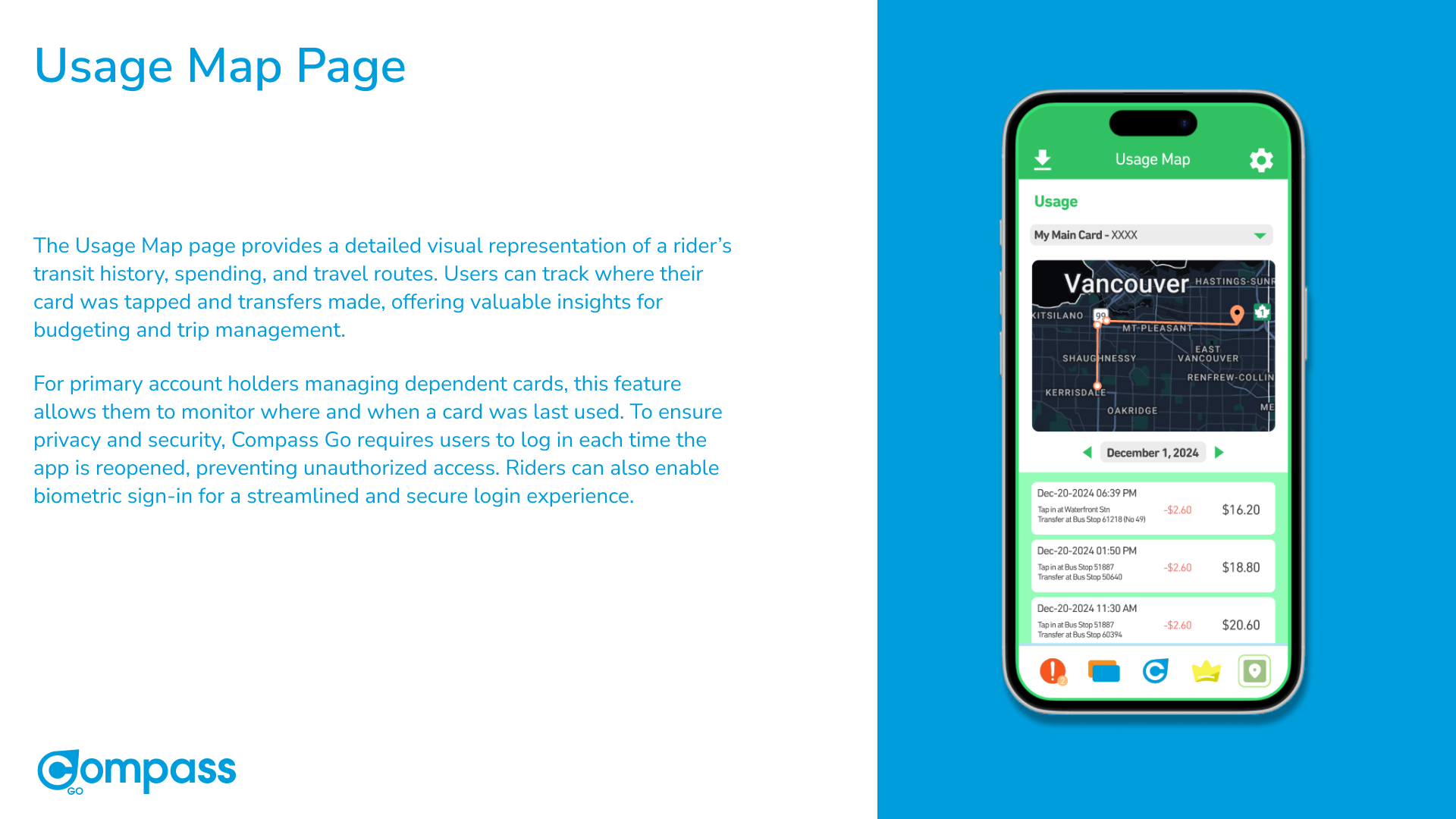
The Usage Map page provides a detailed visual representation of a rider's transit history, spending, and travel routes. Users can track where their card was tapped and transfers made, offering valuable insights for budgeting and trip management.
For primary account holders managing dependent cards, this feature allows them to monitor where and when a card was last used. To ensure privacy and security, Compass Go requires users to log in each time the app is reopened, preventing unauthorized access. Riders can also enable biometric sign-in for a streamlined and secure login experience.
Redesign — Alerts
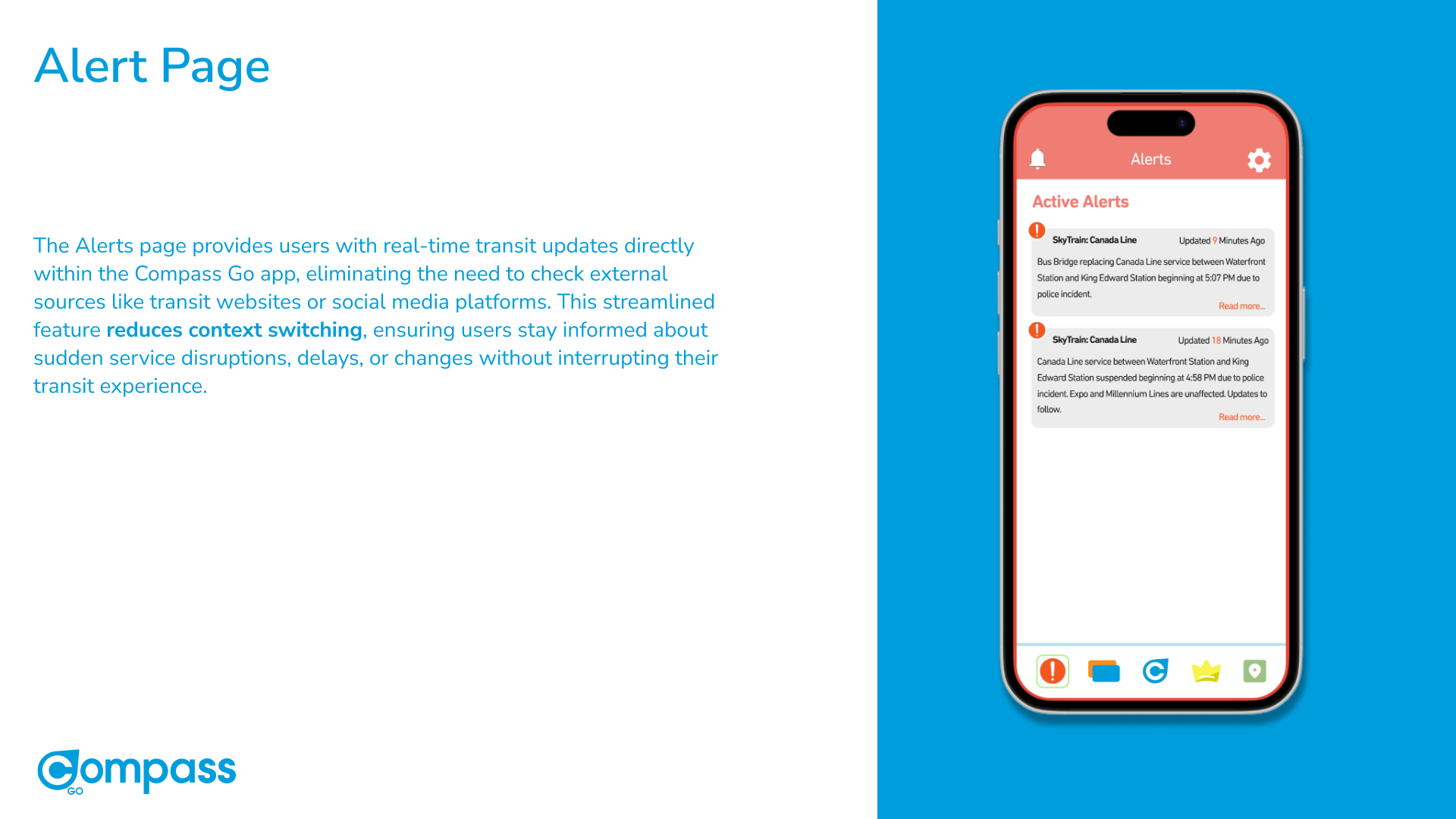
The Alerts page provides users with real-time transit updates directly within the Compass Go app, eliminating the need to check external sources like transit websites or social media platforms. This streamlined feature reduces context switching, ensuring users stay informed about sudden service disruptions, delays, or changes without interrupting their transit experience.
Mockup Showcase
Insights and Lessons Learned
Developing Compass Go revealed key user pain points, such as the need for seamless card management, real-time updates, and better accessibility. These insights led to solutions like dependent card management and usage tracking, improving usability.
I initially explored ideas like a Transit Battle Pass and Leaderboard, but through revisions, I learned that less is more — prioritizing core features creates a more intuitive experience. This project reinforced the importance of balancing innovation with usability, refining designs through iteration, and leveraging user feedback to drive meaningful improvements.